Wedding & Party Planning
Party Band with Horns: What Does a Saxophone or Brass Section Add?
Rhona Downie · 2026-11-18 · 7 min read
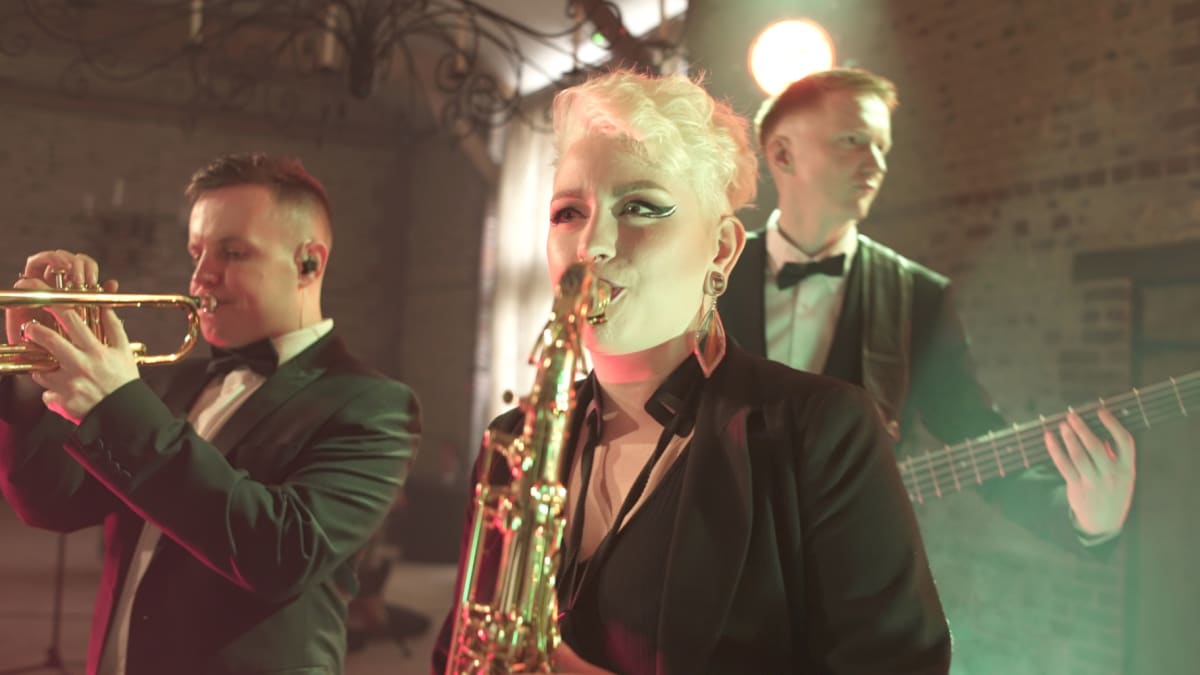
A party band with horns can bring a whole extra dimension to your wedding or event: bright melodies, punchy musical accents and the excitement of a saxophonist stepping onto the dance floor.
But which instruments should you choose? Is one saxophone enough, or is it worth adding trumpet and trombone? And what happens if your venue has a sound limiter?
At The Supreme Collective, these are conversations we regularly have with couples choosing their band. Our starting point is the music you love, followed by the lineup, venue and budget that will make it work.
What does a horn section bring to a party band?
Think about the instrumental hooks in your favourite soul, funk and Motown songs. Those short, recognisable phrases can be just as much a part of the song’s identity as the vocals.
Played live, they add texture and excitement. A saxophone can move between melodic phrases and expressive solos, while a larger horn section lets musicians play harmonised lines and rhythmic accents together.
There is a visual element, too. Horn players can bring movement, personality and interaction to a performance. Seeing the musicians respond to one another is part of what makes a live band feel alive.
That does not mean the horns need to play constantly. Knowing when to leave space is as important as knowing when to make an entrance.
Saxophone, trumpet or trombone: where should you start?
For a mixed-repertoire party band, our usual recommendation is:
- One horn player: start with saxophone.
- Two horn players: saxophone and trumpet make a versatile pairing.
- Three horn players: add trombone for a fuller section.
Saxophone is often the most flexible first addition, particularly when the set moves between soul, funk, disco and pop. It can contribute to the band’s arrangements and have its own featured moments.
Trumpet adds a brighter, more cutting character. Alongside saxophone, it creates opportunities for the players to work as a section rather than simply taking separate solos. Trombone adds another voice and more depth to that sound.
Although saxophone is technically a woodwind instrument, it is commonly included when bands talk about their “horn section”.
You can also book a lineup with trumpet as its only horn. The right choice depends on the arrangements and the sound you want; saxophone is our usual starting point, rather than a rule every band must follow.
Make room for horns without losing the band’s foundations
If you are choosing a smaller lineup, consider what each musician contributes before swapping instruments around.
For example, a five-piece could include:
- Vocals, guitar, bass, drums and saxophone.
- Vocals, keyboards, bass, drums and saxophone.
Both can work well. In a conventional party-band arrangement, we would generally retain either guitar or keyboards to provide the chords and musical support around the singer and saxophone.
A saxophone adds something wonderful, but it does a different job from a guitarist or keyboard player.
Your preferred music matters here. Keyboards can be especially useful for pop arrangements, while guitar may be central to the rock sound you want. For a guitar-led rock band, a second guitarist might contribute more to your favourite songs than an additional horn player would.
The most suitable lineup is the one that serves the music.
Can you have a party band with horns at a venue with a sound limiter?
This is one of the first things to check.
Saxophone, trumpet and trombone produce acoustic sound as well as any sound amplified through the PA. Turning down a microphone does not remove the sound coming directly from the instrument.
A tight volume restriction can therefore make a horn section difficult or unsuitable. Trumpet can be particularly challenging in a room where the permitted level is very low.
However, the presence of a sound limiter does not automatically mean that every horn lineup is impossible. The band needs to understand the particular system, room and restrictions before advising you.
Ask your venue for its technical requirements and pass them to us before confirming the musicians. Include any specific restrictions on brass or saxophone.
A trumpet mute changes the instrument’s sound; it should not be treated as a guaranteed solution to a venue’s volume limit.
Our guide to sound limiters at wedding venues explains the questions to ask. If a big horn-section sound is a priority, assess the venue and band together from the beginning.
Can the saxophonist perform among the guests?
Many of our saxophonists can roam onto the dance floor, particularly when audience interaction is part of the brief.
It can be a brilliant moment: the player moves away from the stage, joins the celebration and brings the performance closer to your guests.
Agree this with the chosen act rather than assuming it is included. The musician needs an appropriate wireless setup, suitable monitoring and a practical route through the room.
Those details are for the band to coordinate, but they make the difference between a spontaneous-looking moment and one that is genuinely well planned.
What if your budget does not stretch to live horns?
A keyboard player may be able to cover some horn lines using suitable sounds and arrangements. This can help retain recognisable musical hooks within a smaller lineup.
It will sound different from live saxophone, trumpet or trombone, particularly when you compare phrasing, solos and interaction between musicians. Listen to the band’s actual arrangements and decide what matters most to you.
A well-chosen smaller band can still deliver an excellent party. We would rather help you build a balanced lineup than encourage you to add an instrument at the expense of something your favourite music really needs.
Could your evening saxophonist also play during the day?
This is worth discussing if you would like saxophone at your drinks reception as well as in the evening band.
The same musician may be able to provide a separate daytime performance, such as relaxed background jazz or an Ibiza-inspired set.
Because they are already travelling to the event for the evening booking, combining the performances may be more economical than arranging a completely separate saxophonist.
It remains an additional performance, with its own timing, setup and fee. Availability, the musician’s repertoire and any equipment needed must all be confirmed, but it can be a useful way to build music across the day.
How to choose your party band with horns
Start by watching performances and comparing the exact lineups available. A promotional video may show more musicians than the package you are considering, so check which instruments your quote includes.
For inspiration, explore Funk Royale and Soul Eras, or browse our funk and soul wedding bands. We can also discuss bespoke horn additions with suitable acts, subject to availability and the band’s arrangements.
Tell us your date, venue, favourite musical styles and whether you are imagining a featured saxophonist or a fuller horn section. We will help you choose a lineup that suits both the room and the celebration.
Looking for live music for your event?
Explore our wedding bands, party bands and live entertainment options for unforgettable celebrations.
Enquire now